Harvard's AI Faculty Avatars: Who Controls the Digital Double?
Published on August 28, 2026 · Reading time: 16 minutes
In one sentence: Harvard Business School is selling a $699 course in which AI copies of its instructors give feedback, and the interesting question is not the technology but what happens when an organisation stops handing a task to AI and starts handing it a person's identity.
Key takeaways
- The experiment is real, and it is cheap. HBS Foundry is an eight-week online course costing $699. AI avatars of instructors, built with HeyGen, give feedback during practice exercises. Human instructors still run live sessions every week.
- Copyright helps, but it stops too early. It protects teaching materials, not a person's face and voice, and not answers that person never gave. The U.S. Copyright Office has asked for a new federal law on digital copies of people.
- "They agreed to it" is not a plan. What the avatar is for, who talks to it, how long it lasts, whether it can be reused, who checks it and who can switch it off are six separate decisions. A general clause settles none.
- A human being involved is not the same as a human being in charge. What matters is what that person can see, correct, limit or stop.
- Handing over a task is not the same as handing over an identity. That is the shift the Harvard case makes easy to see, and the same shape could appear in any organisation that wants to reproduce a recognisable expert.
What did Harvard actually build?
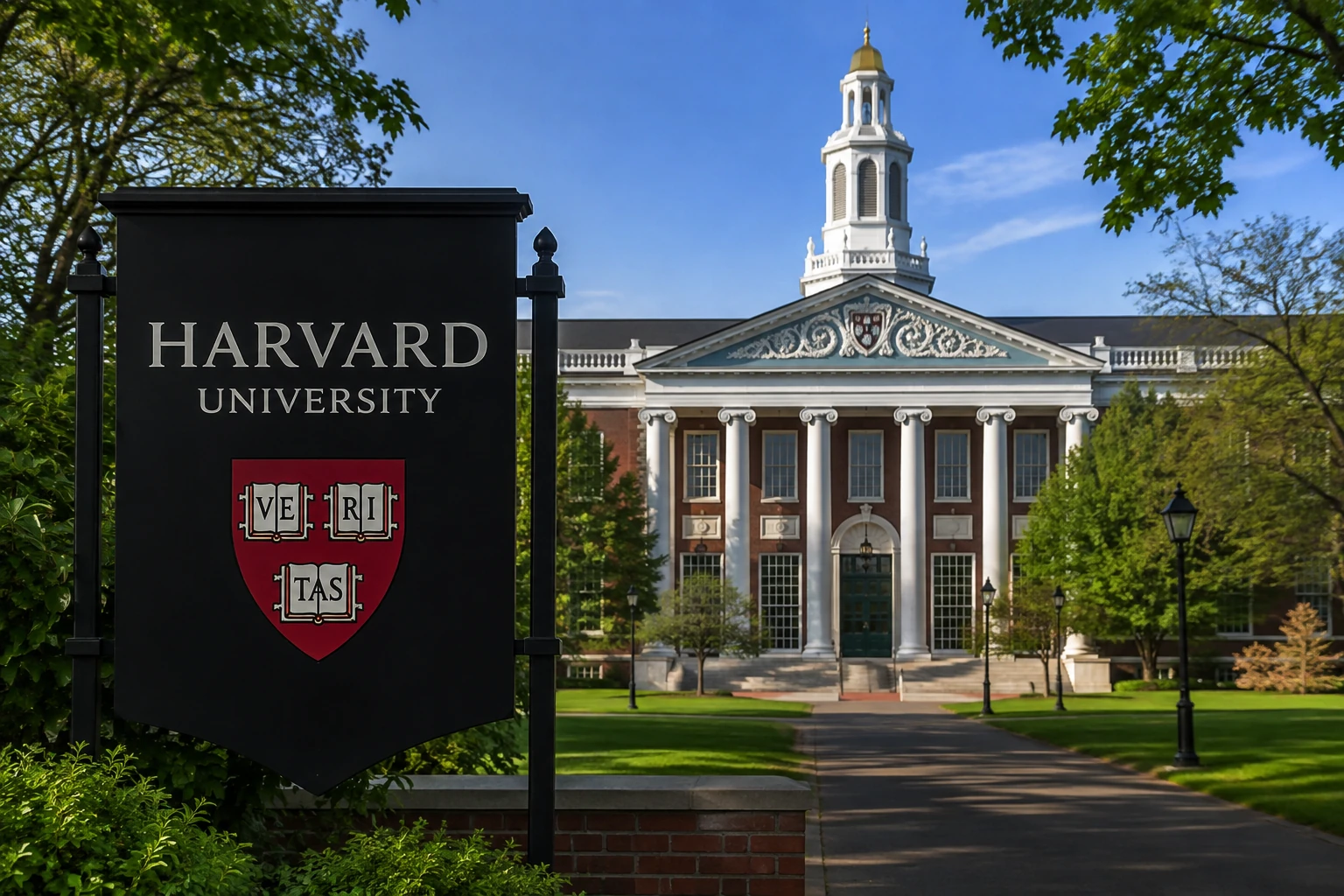
HBS Foundry is an eight-week online course about starting a company, costing $699. Participants practise: pitching to an investor, running a sales conversation, sitting through a board meeting. Their practice partner is a video avatar of a Harvard Business School instructor, built by the AI video company HeyGen from interviews and recording sessions with the instructors themselves. Human instructors also run live sessions every week.
The guided version has run since April 2026, and Harvard says at least 760 founders have taken it. A year of the Harvard MBA costs around $84,760 in 2026-2027, so Foundry costs less than one percent of that.
The project director, Katharina Rings, has said the team first pictured something closer to a ChatGPT-style adviser, and that early users asked for more structure. Tom Eisenmann, a faculty co-chair, has said the avatars were built to challenge people rather than agree with them.
Jeff Bussgang, a senior lecturer and co-founder of the investment firm Flybridge Capital, said yes to a copy of himself. He has called his own avatar creepy, while adding that students like it. Another instructor, Shikhar Ghosh, told Fortune that the point was never to build a replacement for him.
One number worth slowing down on
Several articles have repeated a line about "more than 100 universities across 50 states". What Harvard appears to have said is that the people who took the course come from more than 100 universities, in all 50 states. That is a fact about who signed up. Within days, at least one site had turned it into a claim that the programme had "reached" those universities, which sounds like the universities adopted it. They are different claims, and one quietly became the other. We use the narrower version, and we could not check the underlying number anywhere other than Harvard's own account.
It is worth stating the case for the thing. Foundry answers a real constraint: individual feedback is the scarcest resource in any teaching operation, and rehearsal is exactly the kind of practice people rarely get enough of. Participants have responded well, the instructors involved chose to take part with the terms in front of them, and the programme was built to argue with people rather than flatter them. What does not exist yet is published evidence on whether learners actually do better this way. Not evidence against, simply an open question that the enthusiasm has outrun.
There is also a lot the public record does not tell us: what each instructor signed, what limits were set on each avatar, whether anyone reviews the answers, or what would happen if an instructor changed their mind later. That is not an accusation. Harvard may have settled all of it internally. We cannot see it, and that is where the interesting questions live.
Does copyright cover an AI copy of a teacher?
Copyright is where universities usually start, because it is the tool they already have, and it is genuinely useful here. The American Association of University Professors (AAUP), the main body representing academic staff in the United States, treats lectures and original recordings as the teacher's own intellectual property. Its July 2025 report on AI goes further: one recommendation is that teaching materials should not be fed into AI systems, including the data used to train them, without the creator's agreement.
But an interactive avatar stacks three different things on top of each other. A recorded lecture is content, and copyright handles that well. A recognisable face and voice are part of a person, and copyright was not built for that. An answer generated by the system is something the instructor may never have said at all, and copyright does not settle who answers for it.
A digital replica is a realistic digital copy of a real person's voice or appearance, created or manipulated by technology. On 31 July 2024, the U.S. Copyright Office devoted the first part of its artificial intelligence report entirely to these copies. After reviewing the protections that already exist, it found real gaps and recommended a new federal law covering digital replicas made without permission.
The distinction is easier to hold in two questions. Copyright asks who owns the thing that was made. Governing a digital replica asks who controls the person it was made from, and who answers for what the copy says next. The first is a question about property. The second is a question about authority. Standard intellectual property clauses were written for the first.
What does consent actually need to cover?
"Professor X agreed to an AI avatar" sounds clear. It tells you almost nothing. Compare two sentences that could both be described as agreement. The first: you may make an avatar of me for this eight-week course. The second: you may make a digital version of me and reuse it in future products.
Both are a yes. They hand over very different things, and the difference only becomes visible later, once the copy is already earning money. Useful consent says what it covers: the purpose, the audience, how long it lasts, whether the copy can be changed, reused or sold, whether the person gets to see what it produces, and what happens if they want to stop.
California shows why this is moving from good manners to law. Since 1 January 2025, section 927 of its Labor Code can make part of a contract unenforceable, meaning a court will not apply it. Three things have to line up: the clause lets a digital copy do work the person would otherwise have done themselves; the clause does not describe clearly enough what the copy will be used for; and the person had no lawyer or union representative negotiating that part for them.
Read this carefully
Section 927 is not a ruling about Harvard. Its wording covers contracts for personal or professional services in general, but it grew out of arguments about protecting actors and performers. Applying it to a business school instructor would need facts nobody has published: what the contract says, which state's law governs it, and whether the avatar really does work the instructor would otherwise do in person. Its value here is as an example. Lawmakers have started treating "what exactly is this copy allowed to do?" as the question that decides whether an agreement holds up.
Is "a human in the loop" enough?
Foundry keeps weekly live sessions with real instructors. That matters, and it is why calling this "AI replacing Harvard professors" goes further than the evidence allows. But it also shows how loosely one phrase gets used. "Human in the loop" is meant to reassure: a person is involved, so the system is supervised. It only tells us that someone is somewhere in the process, not that anyone is in charge.
An instructor who joins a weekly call may never see what the avatar said on Tuesday at midnight. Someone who does read those answers may have no power to change how the system behaves. And the person whose face is on screen may have neither. Three plainer questions turn the phrase into something you can check.
Where does a human actually step in? When the system is designed, when answers are reviewed, when something goes wrong, or only during the weekly session?
What can that person see? A few sample answers, the full record, user complaints, or nothing at all?
What can that person do? Correct an answer, narrow what the avatar is allowed to discuss, switch it off, or only raise a concern and hope?
Real oversight needs three things: visibility, authority and the ability to act. Take any one away and "there's a human in the loop" describes who is on the team, not who is in control.
Does a familiar face change how people listen?
One detail from Foundry's own development is worth handling with care. Rings has said that putting a professor's photograph on the chat interface increased engagement, and that the video versions increased users' preference and trust further. Her account is that people seem to prefer an AI, and trust it more, when it is built on one specific person's input.
Be careful with that. It is not a study. Nobody ran a controlled experiment showing that a familiar face causes more trust. It is an observation from the person running the programme, about her own product. As proof it establishes nothing. As a hypothesis it points straight at what makes this category worth watching.
A recognisable face is not a neutral design choice. It may change how people understand who, or what, is speaking. A professor's credibility took decades to build: companies started, money lost, students taught, mistakes made in public. The system has none of that behind it. If the presentation makes those two hard to tell apart, what users are told matters far more than a line buried in the terms and conditions. While they are using it, they should be able to understand that the answer came from an AI system representing this person, and that the person did not necessarily write, say or approve it.
What do the rules say so far?
There is no single American law covering every use of a digital copy of a person. What exists is a patchwork, and it is moving.
Regulatory note: the NO FAKES Act of 2026 (bill number S. 4591) would give people the right to control AI copies of their voice and appearance. It was introduced in May 2026, and on 18 June 2026 the Senate Judiciary Committee approved it unanimously and sent it to the full Senate. A real step, but still a proposal, not law. State by state, most American states let people control the commercial use of their own name, face and voice, often called the right of publicity, and several have extended it to AI copies. California's section 927 deals with contract terms. New York requires advertisers to say so when an ad uses an AI-generated performer, which is a rule about advertising rather than a general rule for every avatar.
It is tempting to read a moving legal picture as a reason to wait. It is the opposite. While the law settles, the decisions fall back on the organisation: who can approve a copy, what it may do, what users are told, who checks it, and who can stop it. Nobody can outsource that to a bill that has not passed.
Is this only a university story?
Harvard makes the problem easy to see, because a professor bundles knowledge, reputation and personal identity into one recognisable package. The same shape could appear in any organisation, with none of the coverage.
Scenarios, not reported cases. A senior specialist is copied to help train new staff, and the copy stays in use after the specialist has moved on. A founder's face answers customer questions overnight, in countries they have never visited. An expert is recorded "so we don't lose your knowledge" before retirement, and the recordings are turned into an interactive system afterwards.
In each case someone said yes to something. The question is whether they said yes to this: this purpose, this audience, this length of time, this reuse. None of these examples describes Harvard. They describe the ordinary version of the same decision, made without press coverage and usually without a written scope.
Underneath sits a worry some academic staff have voiced out loud: that being told to "make use of AI" is preparation for being replaced rather than support. That is not paranoia. It is a fair reaction to being asked to help build something whose limits nobody has written down. Reassurance does not answer it. A written scope does.
How much have you actually decided? A 15-minute check
Digital replica decision check
Ten decisions a digital replica project requires. Go through them only counting the ones already made and written down, not the ones understood, intended, or on someone's list for later. This is not a legal test and cannot tell you whether a project is lawful. It shows how much has been decided out loud rather than left to assumption. Not every project needs all ten. A low-stakes internal use may reasonably skip some, but each one should be skipped on purpose rather than by default. A small team can do this in under 15 minutes.
- Is the copy itself written down?
The replica and what it will be used for should be described specifically, not tucked inside a general contract clause. - Are the limits written down too?
Permitted uses and excluded uses. If only the first is documented, the second will be decided by whoever is in a hurry. - How long does it last?
Duration, renewal, and what happens if the person leaves the organisation. - Who gets paid, if anyone?
Commercial and compensation arrangements, where relevant, considered and recorded rather than assumed. - Can the person see their own copy at work?
A real way to review how the replica is used and what it says, not a promise that they could ask. - Who can stop it?
Correction, restriction and suspension rights, allocated to named people rather than "the team". - Do users know?
Disclosure while they are interacting, not only in the terms and conditions. - What must it never decide?
The purpose and the operational limits, including the decisions the copy must never make on its own. - What can the supplier do with it?
Reuse, retention, model training and deletion conditions, reviewed and decided. - What happens when the use changes?
A new purpose should trigger a new review, not continue under the original agreement.
These ten points are not Harvard Business School's governance framework. No such framework appears in the public information used for this article. They are questions any organisation can put to its own project.
One useful rule: if the answer to any of these is "we would have to check", that is the decision still waiting to be made. Each one has a name attached to it, or it has nobody.
Conclusion
The easy version of this story is technological: Harvard can now put its professors on screen without the professors. The available evidence does not support it. Human instructors are still part of Foundry, and the people who took part chose to.
The harder version is about authority. When an AI system carries someone's face, voice and professional identity, the organisation is no longer delegating only a task. It may also be delegating credibility that the system has not earned, to answers the person never gave.
That needs more than a working model and a signature. It needs limits written down before anything is recorded, disclosure the user can see while they are using it, and a named human who answers for what the copy says.
The copy can speak. Someone still has to own the words.
Further reading
Need guidance?
Ethical AI project - Let's clarify your needs, audiences and use cases.
Magazine - Read Le Doute Utile, the French Prompt & Pulse editorial magazine on responsible AI.
Consultation - AI ethics review, use governance or AI Act compliance.
Book a meetingFAQ
Is it illegal to make an AI avatar of a professor?
Not in itself. Clear, specific, written agreement settles the central question, though not every one. Lawfulness can also turn on state law, the contract terms, how data is handled and what the copy is used for. Without that agreement, the answer depends on where you are: most states let people control the commercial use of their face and voice, by different routes and to different degrees, and several have extended that to AI copies. A national law has been proposed but not passed. In the European Union the picture differs again, since a face and a voice are personal data, so data protection rules apply directly. This article is not legal advice.
Doesn't the employment contract already cover this?
Usually not the part that matters. Employment and intellectual property clauses are written around things that were made: materials, recordings, courses. A copy of a person uses their identity and produces new statements. California has gone as far as making some replica clauses unenforceable when they do not say clearly enough what the copy will be used for, which is a strong hint about where the risk sits.
Does an AI avatar make people trust the answer more?
We cannot say that. The project director has said that adding a specific person's photo and video increased engagement, preference and trust among her users. That is someone describing their own product, not independent research, and it should not be quoted as a proven effect. It is a good reason to be careful about telling users what they are dealing with, not a finding.
What is the difference between copyright and a right over your own likeness?
Copyright protects things that were made: a lecture, a recording, a case study. Rights over a likeness protect the person: face, voice, identity. An AI copy of a teacher touches both, which is why an intellectual property clause alone rarely covers the situation.
We're in Europe. Do these rules apply to us?
The American ones do not, but European rules on telling people when they are dealing with AI may well apply to a similar project here. That question deserves its own treatment rather than a paragraph, and we cover it in a separate article on generative AI in teaching.
What single safeguard matters most?
A specific written scope, agreed before anything is recorded. It forces the awkward decisions about reuse, departure, money and switching the system off while everyone still has goodwill and leverage, instead of after the copy is making money.
Does Prompt & Pulse advise on which avatar tool to use?
No. Choosing tools, deploying systems and technical architecture are outside our scope. We work on the use and governance layer: whether a project should go ahead, on what terms, with what disclosure, and who answers for what it produces.
Sources and references
- Harvard Business School, HBS Foundry programme information.
- Sarah Kessler, "Harvard Is Selling a $699 Course Taught by A.I. Clones of Its Faculty," The New York Times, 22 August 2026.
- Anthony Ha, "Harvard's $699 startup bootcamp offers AI avatars of its instructors," TechCrunch, 22 August 2026.
- "Harvard Is Offering a New $699 Bootcamp for Entrepreneurs, But There's a Catch," Entrepreneur, August 2026 (statements by Katharina Rings).
- "Harvard built AI clones of its faculty. They are now teaching an online course," ThePrint, August 2026 (reporting The New York Times; statements by Rings and Tom Eisenmann).
- "Harvard Built AI Clones of Its Professors and Sold Startup Courses for $699," IBTimes UK, August 2026 (reporting Fortune; statement by Shikhar Ghosh).
- U.S. Copyright Office, Copyright and Artificial Intelligence, Part 1: Digital Replicas, 31 July 2024.
- American Association of University Professors, Artificial Intelligence and Academic Professions, report of the ad hoc committee, July 2025.
- California Labor Code section 927, added by AB 2602 (Kalra), signed 17 September 2024, in force 1 January 2025.
- S. 4591, NO FAKES Act of 2026, 119th Congress; approved by the Senate Judiciary Committee, 18 June 2026.
- New York State, disclosure requirements for AI-generated synthetic performers in advertising, 2026.
Transparency note: This article was co-written with the assistance of generative AI Claude AI and ChatGPT. The illustration accompanying it was also generated with AI. The structure, analysis, editorial choices and final validation were carried out by the author. The author specializes in AI ethics, bias detection and responsible deployment for SMEs. The article keeps three things apart: documented facts about HBS Foundry, statements made by people involved in the programme, and analysis by Prompt & Pulse. Where the public information does not tell us how Harvard handles its contracts or its internal rules, nothing has been assumed. The legal rules described are American, because that is where the case sits, and the legal situation is still changing and should be checked again before publication. This article does not give legal advice. Prompt & Pulse has no commercial relationship with Harvard Business School, HeyGen, or anyone named here.