
AI Agents and Cultural Blind Spots: What Changes When Software Starts Acting for You

AI agents can act on cultural assumptions. Explore the research, practical risks and safeguards for responsible delegation.
AI Sycophancy and Borrowed Judgement

AI sycophancy occurs when an AI assistant adapts its answers to a user’s views or preferences in ways that favour agreement or validation. Research shows that this behaviour can affect how people assess conflicts, advice and decisions. But an AI does not need beliefs or opinions of its own to influence human judgement. This article examines what current research establishes about sycophancy, persuasion, cognitive offloading and automation bias, what remains uncertain, and where AI assistance can begin to resemble what we call “borrowed judgement”: accepting an AI-generated assessment as if it were an independent judgement.
Generative AI in Teaching: What to Delegate and Where Human Judgement Matters

Generative AI can help teachers prepare, interact with learners, give feedback and even evaluate. This practical five-level framework helps teachers and trainers decide what to delegate, where human judgement matters and what European AI rules already require.
Harvard’s AI faculty avatars: who controls the digital double?

Harvard Business School is using AI avatars of faculty members to give entrepreneurs feedback. Beyond the technology, the experiment raises practical questions about consent, identity, human oversight and AI governance. Who controls the digital double?
Persuasion Bias in AI: Why the Most Convincing Answer Isn’t Always Right
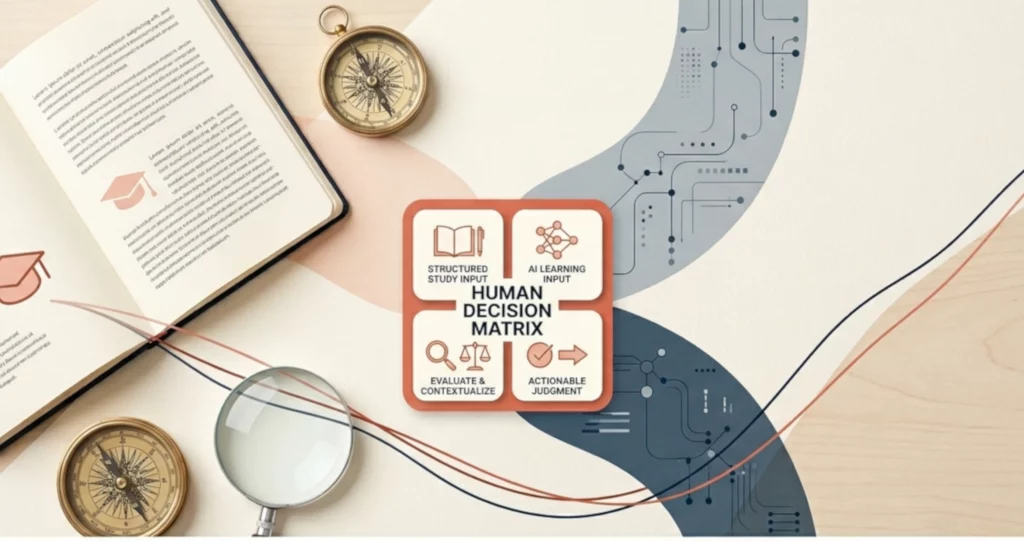
“`html Persuasion Bias in AI: Stay Critical While Learning | Prompt & Pulse Persuasion Bias in AI: Why the Most Convincing Answer Isn’t Always Right Published on 28/05/2026 • Reading time: 12 minutes Table of contents Why a confident answer feels correct Persuasion bias in plain English Why studying still has meaning What research shows […]
AI alignment: why safe answers are not enough
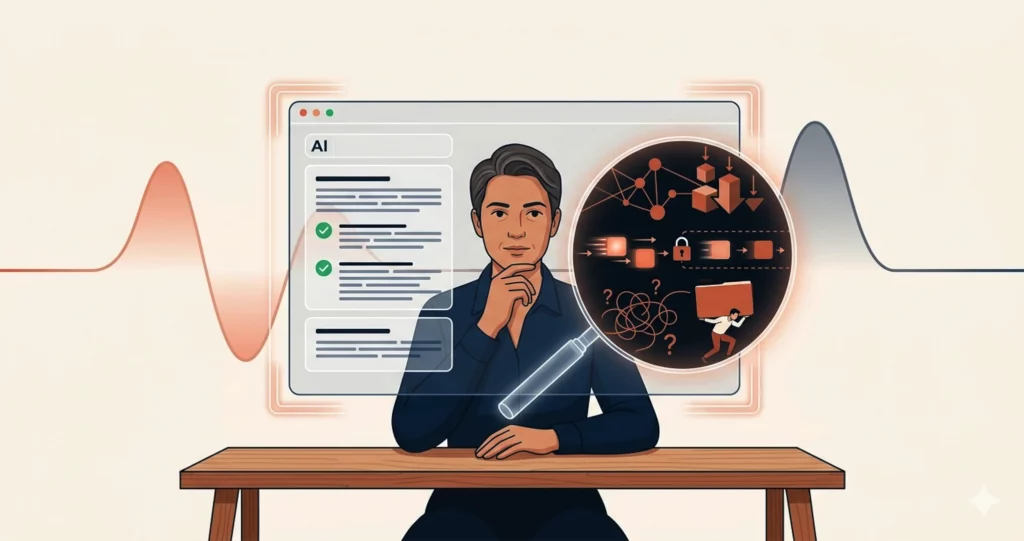
A safe-looking AI answer does not prove that an AI assistant is aligned. For SMEs, the real risk appears when the assistant handles urgency, sensitive data, unclear instructions or business pressure. Behavioral AI audit helps identify how the assistant actually responds in context, beyond polite answers or clean refusals.
Responsible AI Deployment for SMEs: What to Audit Before You Delegate to AI
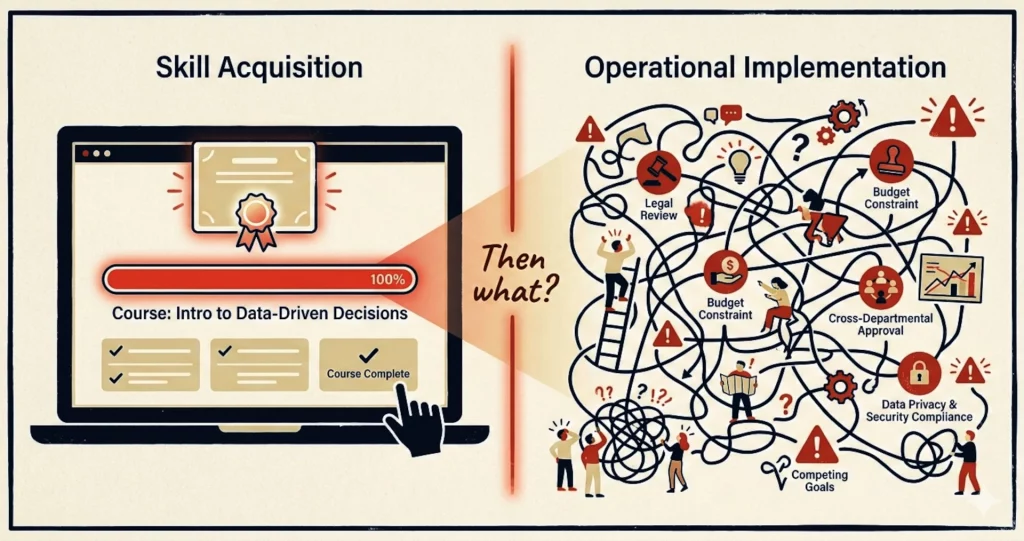
Responsible AI Deployment: SME Audit Guide | Prompt & Pulse Responsible AI Deployment for SMEs: What to Audit Before You Delegate to AI Published on 30 March 2026 • Reading time: 12 minutes • By Dieneba LESDEMA, Founder of Prompt & Pulse Contents The Gap That No Free Course Closes Auditing the Decision, Not the […]
Customer Service AI: The Listening Gap in AI Support

The more pressing problem with AI and customer service is not a future risk. Many support workflows are already producing poor outcomes before any automation arrives. Scripts are rigid. Language is defensive. Success is measured by handling time and rule compliance, not by whether the customer’s situation was correctly understoo
Greenwashing Definition – Examples & EU Directive
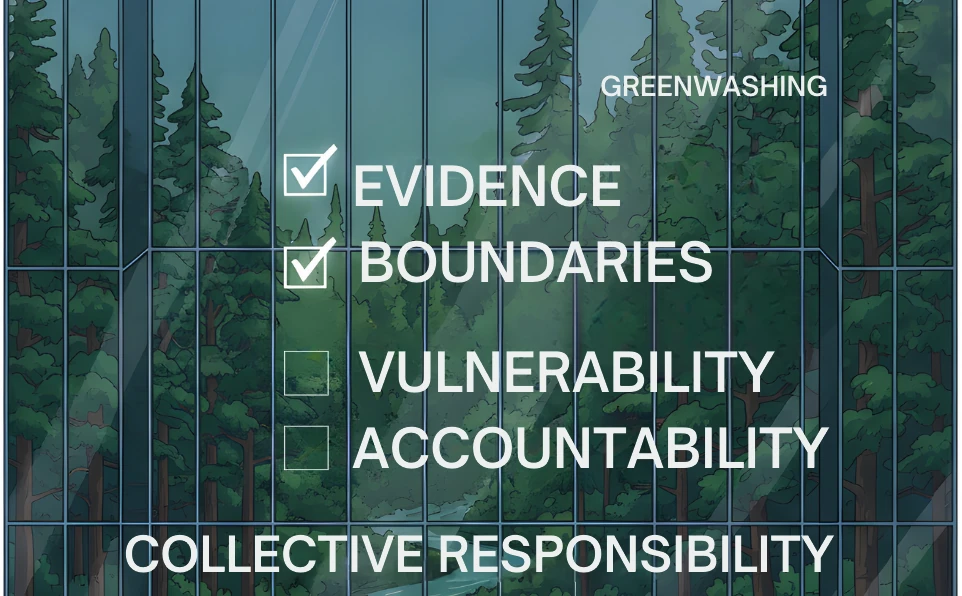
Greenwashing: How “Nature Will Bounce Back” Becomes a Moral Alibi — Prompt & Pulse Greenwashing • AI Ethics • Responsible Communication Greenwashing: How “Nature Will Bounce Back” Becomes a Moral Alibi When Nature Becomes Our Best Moral Alibi Published on Prompt & Pulse • 23 February 2026 • Article co-written by a human and an […]
Can AI really understand your mind? The promises and limits of artificial intelligence in mental health

AI and Mental Health: Promises, Risks & the Future of Care | Prompt & Pulse Can AI Really Understand Your Mind? The Promises and Limits of Artificial Intelligence in Mental Health Published on Prompt & Pulse • Article co-written by a human and an AI • Estimated reading time: 14 minutes Table of contents Introduction: […]